
How to Build an Accessibility Plan Your Leaders Can’t Say No To
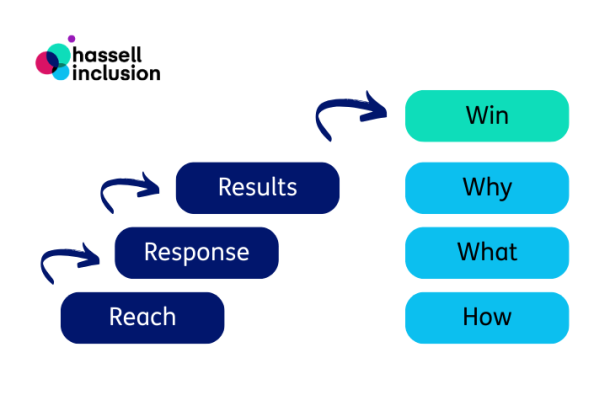
In our latest Digital Accessibility Experts Live webinar, our Chief Product Officer Peter Bricknell, and I explored one of the biggest challenges accessibility professionals face right now: how to create an Accessibility Plan that not only gets approved, but gets Funded.
Budgets are tight, competing priorities are shifting (AI, anyone?), and accessibility teams are under pressure to show value. So how do you turn accessibility from a compliance topic into a business advantage?
We shared a simple but powerful framework – seven words that can turn good intentions into a strategy that wins support across your organisationWin. Why. What. How. Reach. Response. Results.
And we heard from someone who’s made it work in practice – ServiceNow Director of Portfolio Management Natalia DeWitt, MBA – whose story shows what happens when accessibility becomes part of a company’s DNA.
1. Start with the Win
“You win by telling them you’ve won. Don’t start with how – start with the win.”
That’s the first rule. Define what success looks like – more customers reached, fewer complaints, better customer retention, or recognition through awards. At ServiceNow, Natalia and her team made accessibility a business enabler by linking it directly to revenue, reputation, and risk.
When stakeholders see accessibility as a route to growth, not cost, everything changes.
Tip: Run a Return on Investment (ROI) workshop to identify the ‘wins’ that matter most to your organisation – and how to measure them.
2. Make It Measurable
Pushback is inevitable. Competing priorities, tight budgets, limited time – we’ve all been there. ServiceNow overcame this by making accessibility visible and measurable: through dashboards, audits, and public recognition.
“Winning awards might sound like a humble brag,” Natalia told us, “but they’ve become one of our strongest strategies. They show value, build pride, and keep leadership invested.”
And it works. Awards bring validation, PR value, and confidence – inside and outside the business.
Tip: Track metrics like conversion rates, support tickets, and customer satisfaction to prove accessibility ROI. Get support from organisations who have a history of being able to get recognition for companies through accessibility awards.
3. Integrate, Don’t Compete
When new priorities like AI emerge, accessibility sometimes gets pushed aside. Natalia’s team took a different approach:
“Instead of competing with new initiatives, we integrate with them.”
ServiceNow embed accessibility in product lifecycles and innovation processes, so every “shiny new thing” naturally aligns with their inclusion goals.
It’s a mindset shift from “extra work” to “essential element”.
Tip: Position accessibility like security or performance – a non-negotiable part of every project.
4. Build the Movement
Accessibility isn’t just a technical project. It’s a cultural one. Natalia shared how her team builds empathy across ServiceNow – by encouraging everyone to walk in users’ shoes.
They’ve even run sessions where employees turned off their screens and navigated with VoiceOver.
“It changes your perspective,” Natalia said. “Once people feel it, they get it.”
From engineers to executives, everyone has a role in making accessibility happen. That collective understanding and motivation is what makes accessibility sustainable.
Tip: Use empathy labs, live audits,and ‘accessibility champions’ to make inclusion part of everyday work.
5. Plan for Results
Pete reminded us that a strategic plan doesn’t need to be complex – just intentional. Use a quarterly grid to set one major goal per quarter, with clear outcomes, metrics, and communication plans.
Tip: Focus on the wins that show progress – and celebrate them widely.
“Accessibility doesn’t earn just compliance,” we reflected at the close of the session. “It earns trust, loyalty, and reputation.”
Where to Go Next
These insights are just part of our webinar, ‘How to Craft a Strategic Accessibility Plan That Gets Funded‘ that you can watch here.
In the webinar you’ll hear more from our experts on budgets, investment, strategic priorities, how to position your investment, roadmap, and much more.